As the season advanced, the period of low water occurred later, and the writer did not consider it advisable, in the present state of the works, to land on the rock under night, there being nothing to mark its place prior to the erection of the Beacon. Under more favourable circumstances, he would willingly have landed this evening, to entitle the artificers who accompanied him in the morning, to additional wages, as every tide’s work on Sunday counted a day, according to the rate of pay and premiums which he had laid down.
[Sidenote: Neap-tides. Artificers working knee-deep in water.]
The weather, upon the whole, was very fine to-day, and the winds, though variable, were gentle; but from the mildness of the season, it got rather foggy towards the evening. The boats left the floating-light at a quarter past 9 o’clock this morning, and the work began at three-quarters past 9; but as the neap tides were approaching, the working-time at the rock became gradually shorter, and it was now with difficulty that two and a half hours work could be got. But, so keenly had the workmen entered into the spirit of the Beacon-house operations, that they continued to bore the holes in the rock till some of them were knee deep in water. In this work the sailors were also engaged, taking their turns at the boring and other works.

[Sidenote: Operations entirely confined to the Beacon.]
[Sidenote: Description of the operation of boring the rock.]
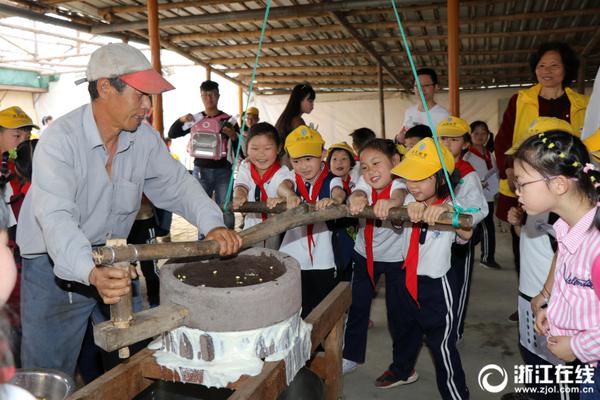
The operations at this time, were entirely directed to the erection of the beacon, in which every man felt an equal interest, as at this critical period the slightest casualty to any of the boats at the rock might have been fatal to himself individually, while it was perhaps peculiar to the writer more immediately to feel for the safety of the whole. Each log or upright beam of the beacon, was to be fixed to the rock by two strong and massive bats or stanchions of iron, of a construction which will be better understood by inspecting the diagrams on Plate VIII., and the accompanying description. These bats, for the fixture of the principal and diagonal beams and bracing-chains, required fifty-four holes, each measuring two inches in diameter, and eighteen inches in depth. The operation of boring or drilling these deep holes in the rock, was conducted with great dexterity in the following manner: Three men were attached to each jumper or chisel; one placed himself in a sitting posture, to guide the instrument and give it a turn at each blow of the hammer; he also sponged or cleaned out the hole, and supplied it occasionally with a little water; while the other two, with hammers of sixteen pounds weight, struck the jumper alternately, generally bringing the hammer with a swing round the shoulder, after the manner of blacksmiths’ work. The three men relieved each other in the operation of guiding the jumper and striking with the hammers. The forms of the jumper, hammer, and sponging-rod, are represented in Plate X., Figs. 7, 8, and 9. After many observations, as to the time occupied in boring these holes, the writer found that, when the tools were of a very good temper, they could be sunk at the rate of one inch per minute, including stoppages. The holes for the stanchions, when completed, measured seven inches in length, two inches in breadth, and eighteen inches in depth. After a jumper had been sunk to the necessary depth at each end of these holes, the most tedious part of the operation was to cut out the piece of rock which remained between the two jumper-holes, so as to clear it fully for the reception of the great iron stanchions, which were of a dove-tail form.