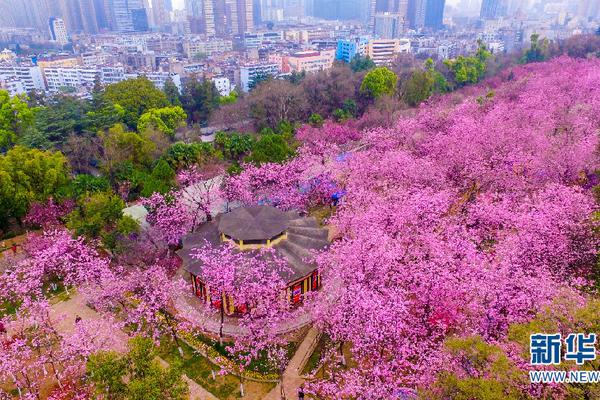
Jiading is a suburban district of Shanghai. It had a population of 1,471,100 in 2010.
History
Historically, Jiading was a separate municipality/town, until, in 1958, becoming under the administration of Shanghai. In 1993, Jiading's designated was changed from a county to a district of Shanghai.

In the early Qing dynasty, which overlapped with Southern Ming, the municipality was infamously known for the "Jiading Massacre", a mass murder carried out by the invading Qing force, led by defected northern Chinese bandit general . In late Qing (in 1853), Jiading city was also known for bandit activities that once captured the city and then Shanghai, as a rebellion of taxation.

In 2005, the Jiading district government invested RMB 10 million to build the Shanghai Museum of the Imperial Examination System.

Geography
Jiading district is located in the northwestern part of Shanghai. It stretches across . It is located about from downtown Shanghai.
Climate
Jiading has a humid subtropical climate (Köppen climate classification Cfa). The average annual temperature in Jiading is . The average annual rainfall is with July as the wettest month. The temperatures are highest on average in July, at around , and lowest in January, at around .
Administration
Jiading District administers several subdistricts towns, including Jiading, Anting, Nanxiang, Huating, Xuhang, Waigang, Huangdu, Malu and Jiangqiao.
Subdistricts and towns
Landmarks
Shanghai University has a campus in downtown Jiading, which is where SILC is based.
The Shanghai International Circuit is located in Jiading. Each year in April, the Shanghai International Circuit holds the Chinese Grand Prix.
Jiading Confucian Temple
Location: 183 Jiading Nan Dajie, near Tacheng Lu, Jiading District, Shanghai
The Jiading Confucian Temple is one of the best conserved Confucian temples in China. It has gone through several repairs in the past 800 years. It is a national cultural and security unit. The temple was first built in year 1219. In year 1249, a pond and three memorial gates were add to the construction and were still seen today. In front of the main gate which opens towards the Da Cheng Hall (大成殿) stands a 688-year-old juniper tree. Throughout the temple, numerous 700-year-old stone tablets stood against the wall, carved with calligraphy and documentation of historical events. Although the existing buildings are only six or seven out of ten, it is still one of the more complete Confucian Temples in China.
There is also a museum of imperial examinations. The rooms surrounding the Da Cheng Hall have been transformed into a museum about the Imperial Examination, where you could read all about its inexhaustible significance since its foundation about 1,300 years ago.
Fahua Pagoda
Location: No.349 Nanda Street, Jiading District, Shanghai
The Fahua Pagoda located in central Jiading adjacent to Zhouqiao Bridge is a tetragonal brick-wooden pagoda with seven floors and a height of . The ancient pagoda -called Jin Sha Pagoda(金沙塔) when it was built in 1205~1207- had been built before Jiading County was established. There is only a pagoda, no temple. According to the legend, the intention to build the pagoda was only to encourage the local intellectuals to study hard. It has a common name called "Wenbi Peak", which means to pray for the imperial examination. It was renamed to Fahua Pagoda in Ming Dynasty(明朝) by a famous Calligrapher. Presently, there are also the Memorial of Gu Weijun and the Memorial of Hu Juewen in the pagoda courtyard, the visitors can know the life stories of these two famous figures from Jiading.
In its long history, it was damaged and rebuilt quite a few times. During one of its reconstructions in 1608, the local officials funded a lot and the pagoda became a lot more beautiful. "Jin Sha Under Sunset"(金沙夕照) had been a famous attraction of Jia Ding Town for a long long time. The latest renovation was in 1996.
The pagoda is surrounded by Zhouqiao Old Street during the renovation in 1996 lots of efforts were put into restoring the buildings around it to what they looked hundreds of years ago.