We mention this last fact as one of the most curious instances of the results which science and inference may, in combination, arrive at when devoted to the novel and interesting study of some of the earlier stages in man's existence. But, on the other hand, it gives us but a poor idea of the cleanliness of the Italian race during the bronze epoch. It would seem to us that a feeling of the dignity inherent in the body of man, and the cares that it so imperiously claims, would have been now more strongly developed than at a period when men dwelt confined in caves. This, however, is not the case. But have we, in the present day, any right to be astonished when we see, even now, the prevalence, in some of the great cities of America, of certain practices so disgusting in character and so opposed to the public health? Osculati, an Italian traveller, relates that at all the street corners in the city of Guayaquil, in the republic of Ecuador, heaps of filth are to be seen which exhale an insupportable odour. Similar heaps exist at the very gates of Mexico, where, at the present time, they form small hills. These facts ought to render us indulgent towards the neglect of cleanliness by our ancestors during the bronze epoch.
Such were the animal remains collected in the _terramares_. The vegetable remains consisted of grains of carbonised corn, broken nuts, acorns, halves of burnt apples, stones of the dog-berry, plums and grapes.

In concluding our consideration of the palustrine settlements, we may add, that some have recently been discovered in Moravia and Mecklenburg. At Olmutz, a city of Moravia, M. Jeitteler, a learned Viennese, has found piles sunk into the peat, along with various bronze and stone objects, ornamented pottery, charcoal, charred wheat, numerous animal bones, and a human skeleton of a brachycephalous race. All the facts lead to the belief that this will not be the last discovery of the kind.
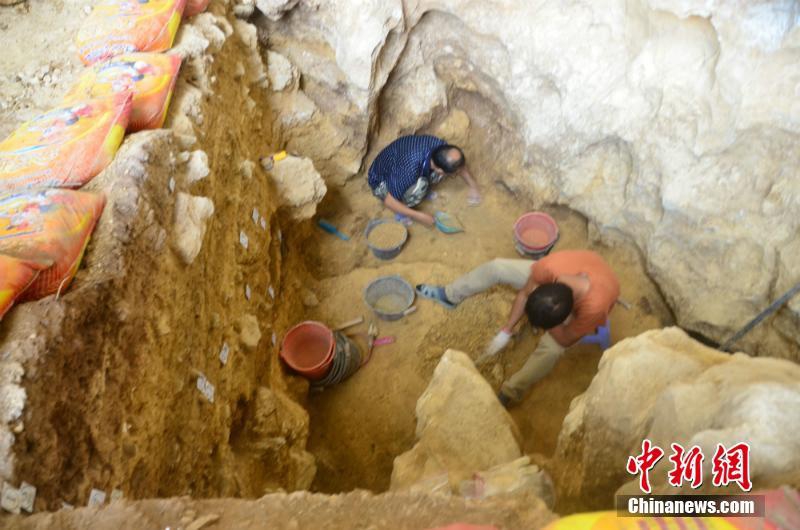
We must also state that the _terramares_, or deposits of the remains of habitations on the edge of marshes, are not peculiar to Europe exclusively. On the coast of Africa (at San Vicente) M. Strobel found remains of an exactly similar nature; and Dr. Henrique Naegeli, a distinguished naturalist of Rio Janeiro, has testified to the existence on the coast of Brazil of like deposits, which he proposes to subject to a thorough examination.[35]





