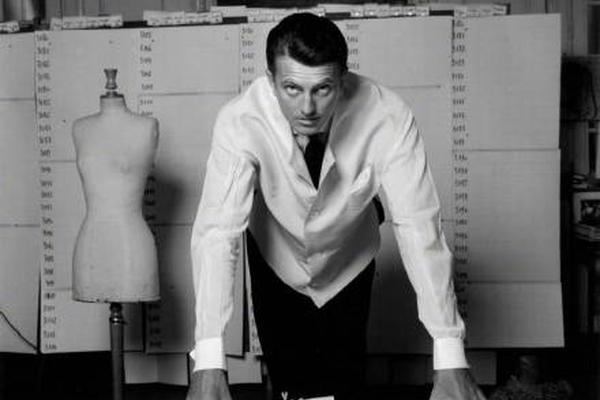
Stuart Scheftel (September 18, 1910 - January 20, 1994) was an American businessman, journalist, politician, and golfer.
Early years
Born on September 18, 1910, Scheftel was the son of Herbert Scheftel, a partner in J. S. Bache & Co. brokerage house, and Vivian Straus Scheftel. He had no middle name. His grandfather was Isidor Straus, co-founder of R.H. Macy & Company, and Jesse I. Straus, once a U. S. ambassador to France, was his uncle. His father died in 1914, and on July 26, 1917, his mother married George A. Dixon Jr. In accordance with the elder Scheftel's will, her marriage resulted in a transfer of what had been her life interest in his $566,555 estate to Scheftel and his brother, Herbert A. Scheftel Jr.

Scheftel's early education came at St. Bernard's School in New York City and Aiken Preparatory School in South Carolina. Additional education came in Britain and France after his mother's marriage to Dixon, who managed an American bank in Paris. His higher education came at Christ Church College at Oxford. While there, he wrote about golf for publications in Britain.
Michael Lindsay-Hogg is his stepson.

Journalism
Following his graduation from Oxford, Scheftel began working for The New York Times in 1931. He first sold subscriptions and then was an office clerk before he became a reporter. The stories on which he reported included the kidnapping of the Lindbergh baby. He left the newspaper in 1935 to found Young America, a weekly news magazine for use in classrooms, with backing from Marshall Field III.
Also in the late 1930s, Scheftel launched another magazine, Sports Illustrated. It was published monthly with a large-page format like that of Life magazine at the time. It emphasized quality in both written and print journalism and focused more on country-club activities than on professional sports. However, a shortage of paper forced Scheftel to discontinue one of his two publications. He ended the sports magazine in order to focus on Young America. The name Sports Illustrated went unused until 1954, when Scheftel talked with Harry Phillips, the publisher of a new and not-yet-named sports magazine being started by Time Inc. Scheftel offered to sell the Sports Illustrated title "for something in the low five figures" plus a free subscription. Henry Luce, founder of Time Inc., agreed, and the new magazine took on the old title.
From April 18, 1952, until December 19, 1952, Scheftel was host of The Hot Seat, a 30-minute American Broadcasting Company television program on which he and a guest interviewed public figures, including Joseph McCarthy and Tex McCrary.
Politics and public service
In 1942, Scheftel lost as a Republican candidate for the 14th Congressional District in Manhattan. In December 1947, he became chairman of the Draft Eisenhower for President Committee, but he had left the Republican party by the time Eisenhower ran in 1952. As a member of the Liberal Party, he was campaign manager for Rudolph Halley when Halley was elected President of New York's City Council. Scheftel also chaired the Committee at Large advisory group for the Liberal Party.
In 1950, Scheftel was in charge of press relations for the Senate Crime Investigating Committee, with Estes Kefauver at its head. In 1961, he sought to be the Liberal Party's candidate for mayor of New York City, but he withdrew after failing to gather enough signatures on the designating petition. He became vice-chair of the Liberal Party, a position from which he resigned in 1980, protesting the party's endorsement of John B. Anderson for president.
On January 8, 1969, Scheftel became the chairman of the New York City Youth Board, of which he had been a member since 1966. His role in that position included investigating problems related to young people and suggesting programs that might be implemented by the city's Youth Service Agency. That board oversaw the agency, which administered a city-and-federally-funded summer jobs program that involved 40,000-50,000 teenagers who worked 30 hours per week and attended three hours a week of classroom instruction.
During World War II, Scheftel served in the Psychological Warfare Division of the U. S. Army.
Business
Scheftel was a co-founder of the Pan Am Building in New York City, and he was a director of Bullington Realty Corporation, Transcontinental Properties, Inc. and the New York Post.