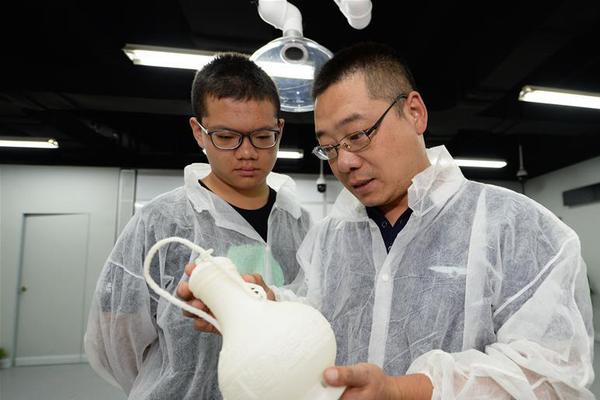
We read continually in the newspapers of the opening of old tombs and ancient subterranean caves, in which are discovered dead bodies, bones, dresses, implements of bone and wood or leather, or even of baked earth, which gradually dropped into dust a few hours after being exposed to the air. And I have never known a case in which these objects could not have been preserved; certainly all which I have ever seen could have been. All that is necessary to do is to make a thin size, and very gradually spraying or sprinkling it on the objects, allow it to dry, little by little. There are very few cases in which, indeed, the spray cannot be successfully used. It was by the application of this principle that Sir Joseph Hooker preserved the ivory articles brought from Nineveh by Sir Austen H. Layard, and which would have perished but for him. He advised that they should be boiled in gelatine. The student who becomes an expert in such repairing will find plenty to do, and it will be his own fault if it is not profitable. Nineteen people out of twenty have not the least conception of the degree to which repairs may be carried. Some years ago a gentleman in America had a very curious and valuable vase from the pyramid of Cholula in Mexico. It was very fragile, being made of the weakest terra-cotta, and having been broken to pieces, the owner was about to throw it away, but gave it to me. Some months after I repaired it so perfectly that the closest observation could not detect a flaw in it. I did this by fastening pieces of paper on the inside with gum, and so gradually bringing the fragments together, edge to edge, and fastening them with the acidulated glue. When all were together, there was, of course, a lining of paper. Where there was a fault or a deficiency outside, I filled it in with plaster of Paris, rubbed it all even, and coloured by "rubbing in" paint. This process would have been much easier with decayed wood.
In gluing ordinary wood together, heat the two pieces first. This renders them more inclined to "take" the glue. Sometimes it is a difficult thing to hold them together till they "set," that is, adhere so firmly that they will hold. For this the clamp, Fig. 7_a_, may often be used. In other cases, take two pieces of wood, put one on each side of the parts to be glued, and tie them tightly together; sometimes clamps may be used to connect the binding pieces, when they are not applicable to what is to be glued. Strong indiarubber rings or gummed paper strips may be used in some cases. But with thought, ingenuity can generally be awakened so as to help one out of any such difficulty.