Garnering the herring-crop is the Coast Indian’s best ‘sea-harvest;’ lodges spring up like mushrooms along the edges of the bays and harbours; large fleets of canoes dot the water in every direction, their swarthy crews continually loading them with glittering fish; paddling ashore, they hand the cargo to the female part of the community, and then start again for a similar freight.
Indians have various plans for catching herrings. Immense numbers are taken with small hand-nets, literally dipping them out of the water into the canoes; they also employ the ‘rake,’ already described as used for taking candle-fish. One savage, sitting in the stern of his canoe, paddles along, keeping in the herring shoal; another, having the rounded part of the rake firmly fixed in both hands, sweeps it through the crowded fish, from before aft, using all his force: generally speaking, every tooth has a herring impaled on it, sometimes three or four. It is astonishing how rapidly an Indian will fill his canoe with herrings, using this rude and primitive contrivance.
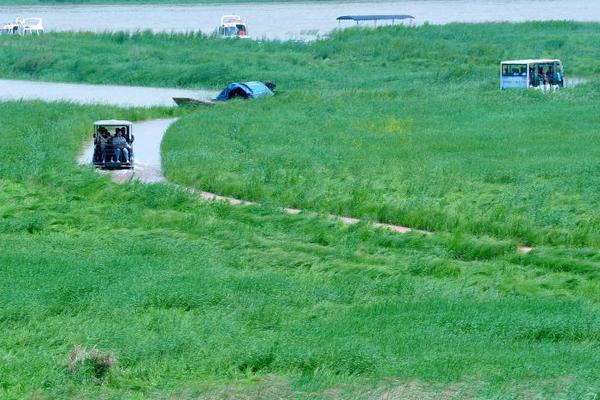
A wholesale system of capture is practised in Puget’s Sound, Point Discovery, and Port Townsend, where large mud-flats run out for long distances into the sea, which are left quite dry at low-tide. Across these flats Indians make long dams of latticework, having here and there openings like our salmon-traps, allowing herrings to pass easily in, but preventing their return. Shoal after shoal pass through these ‘gates,’ but are destined never to get back to their briny home. It is not at all uncommon to take from two to three tons of fish at one tide, by this simple but ingenious method.

When the tide is well out, and the flats clear of water, the Indians bring down immense quantities of fir-branches, and stick them in the mud, lay them on the ground, and, in all sorts of ways, distribute them over the flats, within the weir-dam. On these branches the herring-spawn gets entangled; when covered with spawn the branches are carried to the lodges, and the fish-eggs dried in the sun. Thus dried, and brushed into baskets, it is in appearance very much like coarse brown sand; it is then stored away, and when eaten mixed with fish-oil is esteemed by the Indians as the very perfection of feeding. This spawn is to Indians what _caviare_ is to Russians; but as I do not like either, it may be I am not an authority on its merits as a table dainty.