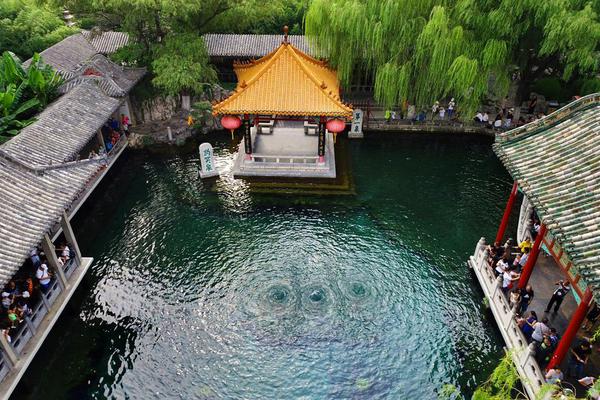
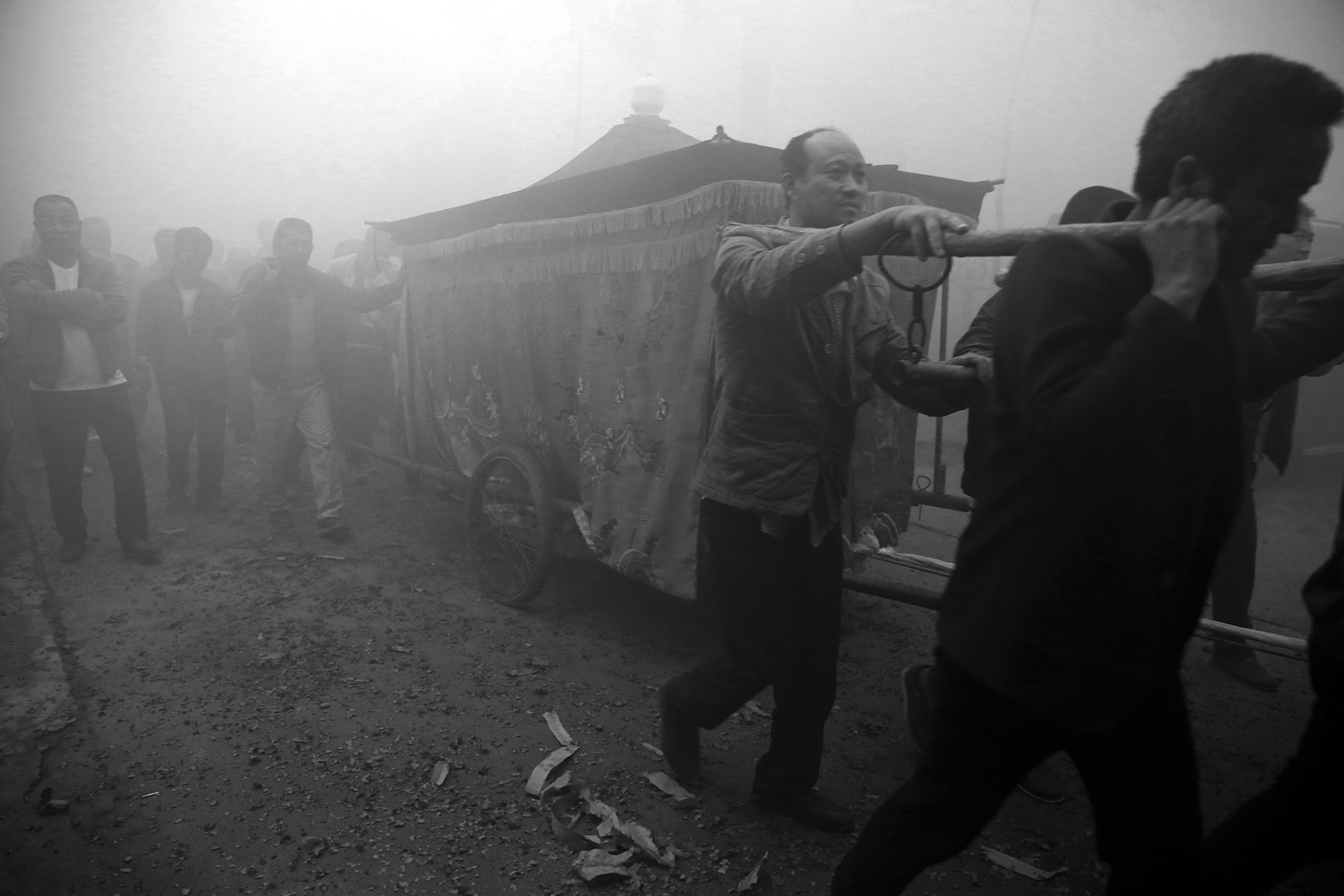
Fuyang (, previously romanized as Fowyang) is a prefecture-level city in northwestern Anhui province, China. It is bordered by Henan province to the west and the cities of Bozhou to the northeast, Huainan to the southeast, and Lu'an to the south.
Its population was 8,200,264 inhabitants at the 2020 census whom 2,128,538 lived in the built-up (or metro) area made of 3 urban districts Yingzhou, Yingdong and Yingquan.
History
Early Ruyin
Starting with the Qin dynasty, the region now called Fuyang was called Ruyin (). Ruyin was classified as part of the ancient province of Yuzhou. In the early Han dynasty, Ruyin was ruled by Xiahou Ying (d. 172 BCE), who fought alongside Liu Bang against the latter's archrival Xiang Yu in the Chu–Han Contention (206–202 BC), and helped Liu Bang establish the Han dynasty. Following the establishment of the Han dynasty, the title conferred upon Xiahou Ying was "Lord of Ruyin" (). The second Lord of Ruyin was Xiahou Ying's son, Xiahou Zao () (d. 165 BCE), whose tomb was later rediscovered in Fuyang in 1977.
Shuanggudui
The site of the second Lord of Ruyin's tomb, called Shuanggudui, was rediscovered in 1977 when Fuyang's municipal airport was undergoing an expansion. Two tombs were found, although only one contained texts. Much like Mawangdui, important classical Chinese texts were found at Shuanggudui that shed new light on ancient Chinese culture and literature. Texts recorded on bamboo strips were found at Shuanggudui, including the Yijing, Classic of Poetry, Zhuangzi, Cang Jie Pian (primer), Classic for Physiognomizing Dogs (), tables of historical annals, studies of myriad phenomena (), a text on xingqi (, circulating breath), and others.
Ouyang Xiu
Ouyang Xiu, one of famous Eight Masters of the Tang and Song, died in 1072 in present-day Fuyang, Anhui. His influence was so great, even opponents like Wang Anshi wrote moving tributes on his behalf. Wang referred to him as the greatest literary figure of his age.
Red Turban Rebellion
In the fourteenth century, Han Shantong sought to overthrow the ruling Mongol Yuan dynasty. Han styled himself as the "Great King of Light," claiming to be an incarnation of Maitreya Bodhisattva, and heir to the preceding Song dynasty. Han was a native of Yingzhou, where he began the main thrust of the Red Turban Rebellion in 1351, initially gaining the support of 3000 rebels, and later 10,000. After entering Shandong province, the Red Turban Army merged with other rebel movements, eventually leading indirectly to the founding of the Ming dynasty.
Great Leap Forward
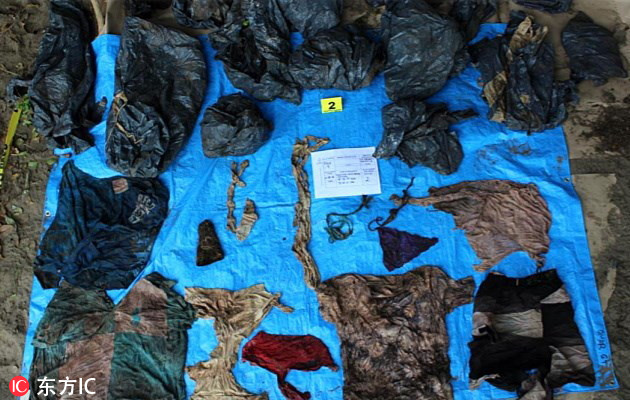
According to Chinese government reports in the Fuyang Party History Research Office, between the years 1959 and 1961, 2.4 million people from Fuyang died from famine. Before the famines, in 1958, the population of Fuyang had been 8 million people. During this period, Zeng Xisheng, the provincial Party secretary of Anhui, pursued large water conservation projects that led to insufficient irrigation for local crops, leading to mass starvation. Local cadres, fearing repercussions from Zeng, underreported death rates in their regions, in some cases forcing the starving villagers to hide if there was an official inspection. When Vice Chairman Dong Biwu came to visit the Fuyang region, provincial leaders ordered all corpses to be removed from Dong's travel route, and for edema patients to be rounded up and kept out of sight.
According to Frank Dikötter, death rates in the Fuyang region were especially high, rivaling those in Cambodia under the Khmer Rouge. Dikötter has summarized some of the history of exceptional violence in rural Fuyang during the Great Leap Forward, carried out by local Party members:
In some cases the violence was directly related to starvation, as in one case in Funan county in 1959:
Since the 1980s there has been greater official Chinese recognition of the importance of policy mistakes in causing the disaster, and the Party has acknowledged that the disaster was caused mainly by gross mismanagement, using the expression, "Three parts natural disaster and seven parts man-made disaster."
Blood selling
In the 1990s, commercial blood selling schemes led to entire villages in Henan and Anhui being infected with the HIV virus. The government in Fuyang, which at that time was headed by Wang Huaizhong (), encouraged rural villagers to sell blood as a way to supplement their income. The blood collectors would often draw too much blood, causing their feet to go numb, and sometimes people were even hung upside down against a wall to force blood to flow back into their arms.