E.N.W. says it is printed in the collection of _Nursery Rhymes_ published by Burns, and that he was born and bred in London, and that it was one of the nursery songs he was amused with. NOCAB ET AMICUS, two old fellows of the Society of Antiquaries, do not doubt that it refers to some event preserved in history, especially, they add, as we have a faint recollection "of a note, touching such an event, in an almost used-up English history, which was read in our nursery by an elder brother, something less than three-fourths of a century since. And we have also a shrewd suspicion that the sequel of the song has reference to the reconstruction of that fabric at a later date."
J.S.C. has sent us a copy of the song; and we are indebted for another copy to AN ENGLISH MOTHER, who has accompanied it with notices of some other popular songs, notices which at some future opportunity we shall lay before our readers.--ED.]

I must apologise for adding anything to the already abundant articles which have from time to time appeared in "NOTES AND QUERIES" on this interesting subject; I shall therefore confine myself to a few brief remarks on the _form_ of each character, and, if possible, to show from what alphabets they are derived:--
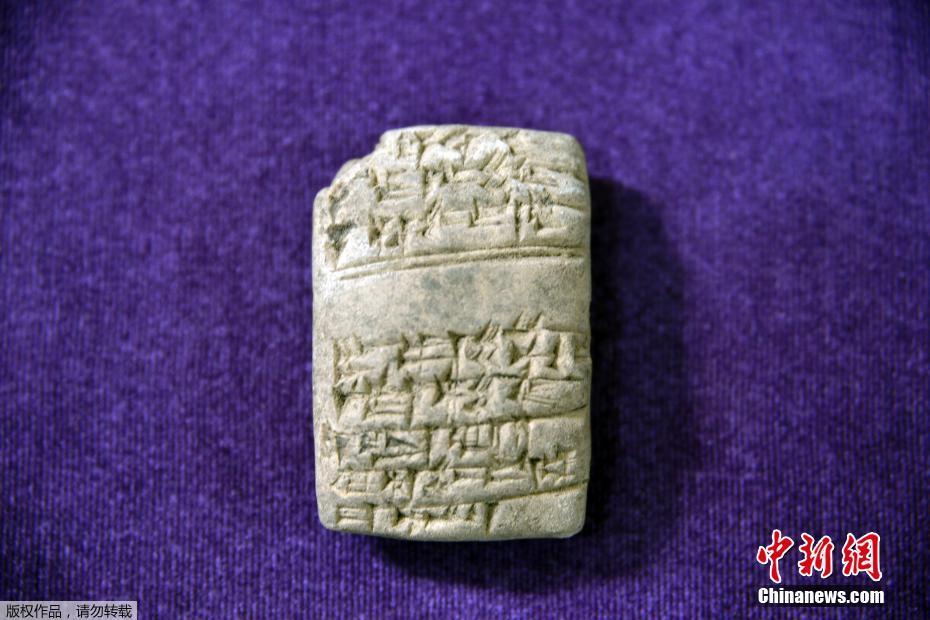
1. This most natural form of the first numeral is the first character in the Indian, Arabic, Syriac, and Roman systems.
2. This appears to be formed from the Hebrew [Hebrew: b], which, in the Syriac, assumes nearly the form of our 2; the Indian character is identical, but arranged vertically instead of horizontally.
3. This is clearly derived from the Indian and Arabic forms, the position being altered, and the vertical stroke omitted.
4. This character is found as the fourth letter in the Phoenician and ancient Hebrew alphabets: the Indian is not very dissimilar.
5. and 6. These bear a great resemblance to the Syriac Heth and Vau (a hook). When erected, the Estrangelo-Syriac Vau is precisely the form of our 6.
7. This figure is derived from the Hebrew [Hebrew: z], zayin, which in the Estrangelo-Syriac is merely a 7 reversed.
8. This figure is merely a rounded form of the Samaritan Kheth (a travelling scrip, with a string tied round thus, [Character]). The Estrangelo-Syriac [Character] also much resembles it.