=Definition of Instinct.=--In a foregoing section, it was seen that our bodily movements divide into different classes according to their source, or origin. Among them were noted certain inherited spontaneous, but useful, complex movements which follow, in a more or less uniform way, definite types of stimuli presented to the organism. Such an inherited tendency on the part of an organism to react in an effective manner, but without any definite purpose in view, whenever a particular stimulus presents itself, is known as instinct, and the resulting action is described as an instinctive act. As an example of purely instinctive action may be taken the maternal instinct of insects whose larvæ require live prey when they are born. To provide this the mother administers sufficient poison to a spider or a caterpillar to stupefy it, and then bears it to her nest. Placing the victim close to her eggs, she incloses the two together, thus providing food for her future offspring. This complex series of acts, so essential to the continuance of the species, and seemingly so full of purpose, is nevertheless conducted throughout without reference to past experience, and without any future end in view. Instinct may, therefore, be defined as the ability of an organism to react upon a particular situation so as to gain a desirable end, yet without any purpose in view or any previous training.
=Characteristics of Instinct.=--An instinctive act, it may be noted, is distinguished by certain well marked characteristics:

1. The action is not brought about by experience or guided by intelligence, but is a direct reaction on the part of the organism to definite stimulation.
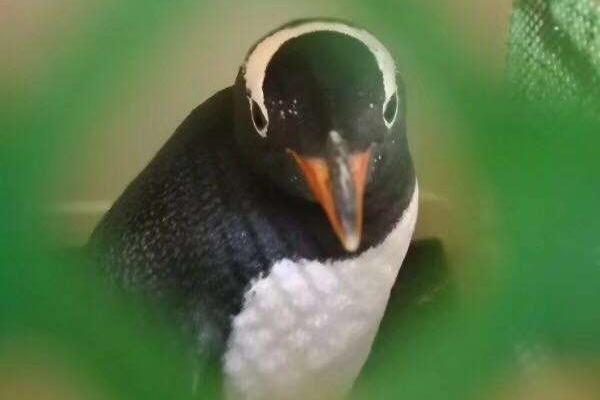
2. Although not the result of reason, instinctive action is purposeful to the extent that it shows a predisposition on the part of the organism to react in an effective manner to a particular situation.

3. An instinctive movement is a response in which the whole organism is concerned. It is the discomfort of the whole organism, for instance, that causes the bird to migrate or the child to seek food. In this respect it differs from a mere reflex action such as the winking of the eye, breathing, coughing, etc., which involves only some particular part of the organism.





