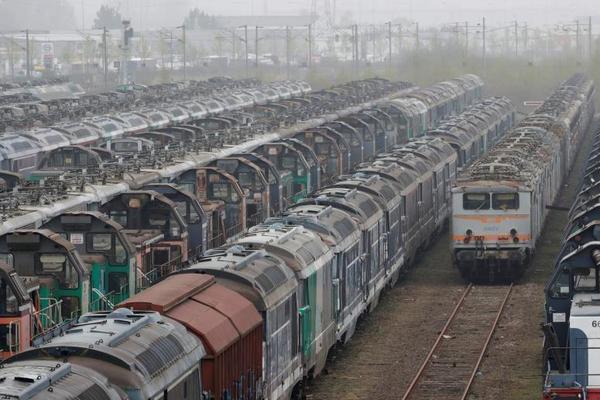
The power of railway monopolies largely depends upon the degree in which their services are indispensable, and no alternative mode of transport is open. Sometimes, however, they miscalculate the extent of their power. The high railway rates in England have recently led in several quarters to a substitution of road and canal traffic in the case of goods where rapidity of conveyance was not essential. So also in other cases sea-transport has been substituted.
The stronger monopoly of American railways consists partly in the fact that distances are so great, and the sea-board or other water conveyance so remote, that over a large part of the Continent the monopoly is untempered by alternative possibilities of transport.
The reverse consideration, the possibility of substituting the article of monopoly for other articles of consumption, and so securing a wider market, has quite as important an influence on prices. The possibility of substituting oil for coal in cooking and certain other operations has probably a good deal to do with the low price of oil. A Trust will often keep prices low for a season in order to enable their article to undersell and drive out a rival article, a competition closely akin to the competition with a rival producer of the same article. When natural gas was discovered in the neighbourhood of Pittsburg, the price was lowered sufficiently to induce a large number of factories and private houses to give up coal and to burn gas. After expensive fittings had been put in, and the habit of using gas established, the Gas Company, without any warning, proceeded to raise the rates to the tune of 100 per cent. When we ascend to the higher luxuries, the competition between different commodities to satisfy the same generic taste, or even to divert taste or fashion from one class of consumption to another class, is highly complicated, and tempers considerably the control of a Trust over prices.

The power of a company which holds the patent for a particular kind of corkscrew is qualified very largely not only by competition of other corkscrews, but by screw-stoppers and various other devices for securing the contents of bottles. The ability to dispense with the object of a monopoly, though it does not prevent the monopolist from charging prices so much higher than competition prices as to extract all the "consumer's rent," of the marginal consumer, forms a practical limit to monopoly prices.