Dr. Wu Mengchao (; 31 August 1922 22 May 2021), was a Chinese surgeon and a medical scientist who specialized in hepatobiliary surgery. He was also known as the "Father of Chinese Hepatobiliary Surgery".
Wu was born in Minqing County, Fuzhou, China. In 1940, he was admitted to 同济附中 (tong ji fu zhong), a high school affiliated to Tongji University. In 1949, he graduated from Tongji University School of Medicine in Shanghai. He was elected to the Chinese Academy of Sciences in 1991 and was awarded the State Preeminent Science and Technology Award in 2005, China's highest scientific prize, by President Hu Jintao. He was the founding director of Eastern Hepatobiliary Surgery Hospital affiliated to the Second Military Medical University in Shanghai. On January 1, 2019, Wu retired.

Wu proposed the new perspectives on liver anatomy, invented the a new operation of intermittent interruption of the Porta Hepatis at room temperature, and established the complete hepatobiliary diagnostic system and several hepatobiliary specialist hospitals in China.
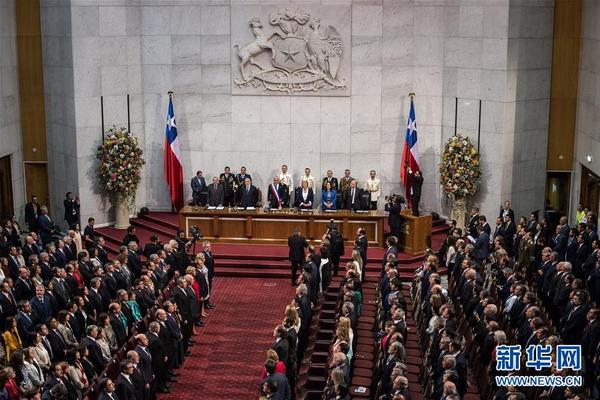
At 13:02 on 22 May 2021, Wu Mengchao died in Shanghai at the age of 99.

The minor planet 17606 Wumengchao was named after him.
Early life and education
Wu was born into a small mountain village family in Minqing County, Fujian. At age of five, he and his mother moved to Malaysia to live with his father. When he was eight years old, he started to study at an overseas Chinese school while helping his father at his job cutting rubber from the trees.
In 1940, Wu returned to China for participating in anti-Japanese activities during the Second World War. But he was unable to go to the frontline, so he enrolled in High School Affiliated to Tongji University and determined to “study to save the country” by treating wounded soldiers and raising funds. In 1943, he was admitted to the Tongji University School of Medicine in Shanghai and graduated in 1949.
Career
After graduation, he was assigned to be a pediatrician at the university, but his dream of becoming a surgeon led him to turn the offer down and look for opportunities elsewhere. In 1949, he joined The First Affiliated Hospital (Changhai Hospital) of People's Medical College of East China Military Region (Second Military Medical University now), and became a military surgeon. In the hospital, he was inspired by Doctor Qiu Fazu.
In 1958, Wu wanted to find a theoretical breakthrough, and there were no books on hepatic surgery in Chinese. So he translated and published an English edition of Introduction to Hepatic Surgery by Henry Gans. This is the first book on hepatic surgery that laid the theoretical foundation for developing liver surgery in China.
In the same year, Wu worked with other two surgeons as a research group seeking breakthroughs in hepatic surgery. He figured out to use ping pong balls as infusion material to make the first human liver vascular model in China after repeatedly testing more than 20 kinds of infusion materials to no avail. The success of this specimen played a decisive role in helping to understand the distribution of vessels and the direction of blood flow in the liver.
After that, Wu led the group to produce many cast modelings of the liver. After observation, research, and 200 cases of clinical exploration, Wu understood the deconstructed structure of the human liver. In 1960, a creative view of five lobes and four segments of liver anatomy was proposed by him tailoring to Chinese people.
In 1960, he performed the first successful liver surgery ever in Changhai Hospital, successfully removing liver cancer from a female patient.
In 1963, he managed to operate on the middle lobe of the liver that is at the “heart” of the liver and is surrounded by numerous blood vessels, often called forbidden zone in hepatic surgery. This is the first successful lobectomy of the middle liver in the world.
In 1975, he removed the largest hepatic cavernous hemangioma ever removed in China and abroad, weighing 18 kg, in a single incision.
Wu's achievements gradually went overseas. In September, 1979, Wu was invited to deliver a report at the 28th International Society of Surgery Congress in San Francisco. Wu reported 181 cases of primary liver cancer treated by surgical resection from January 1960 to December 1977 with a low mortality rate of only 8.8%, which shocked the participating experts. At the meeting, Wu Mengchao was inducted as a member of the International Surgical Society, as a recognition of the international medical community for liver surgery in China.




