In a fresco on the ceiling of one of the private chambers, is a portrait of the late lamented Grand-duchess. On the mantelpiece in the Duke's cabinet also is a beautiful marble bust of her. It is a face and head corresponding perfectly to the character given her by common report, full of nobleness and kindness. The Duke, who loved her with a devotion rarely found in marriages of state, is inconsolable since her death, and has shut himself from all society. He hardly slept during her illness, watching by her bedside constantly. She was a religious enthusiast, and her health is said to have been first impaired by too rigid an adherence to the fasts of the church, and self-inflicted penance. The Florentines talk of her still, and she appears to have been unusually loved and honored.
I have just returned from hearing an _improvisatrice_. At a party last night I met an Italian gentleman, who talked very enthusiastically of a lady of Florence, celebrated for her talent of improvisation. She was to give a private exhibition to her friends the next day at twelve, and he offered politely to introduce me. He called this morning, and we went together.

Some thirty or forty people were assembled in a handsome room, darkened tastefully by heavy curtains. They were sitting in perfect silence when we entered, all gazing intently on the improvisatrice, a lady of some forty or fifty years, of a fine countenance, and dressed in deep mourning. She rose to receive us; and my friend introducing me, to my infinite dismay, as an _improvisatore Americano_, she gave me a seat on the sofa at her right hand, an honor I had not Italian enough to decline. I regretted it the less that it gave me an opportunity of observing the effects of the "fine phrensy," a pleasure I should otherwise certainly have lost through the darkness of the room.
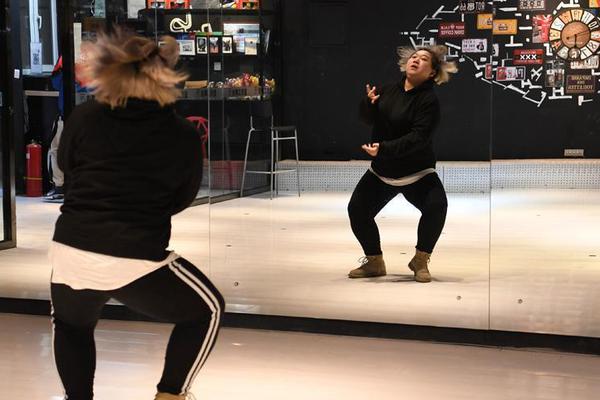
We were sitting in profound silence, the head of the improvisatrice bent down upon her breast, and her hands clasped over her lap, when she suddenly raised herself, and with both hands extended, commenced in a thrilling voice, "_Patria!_" Some particular passage of Florentine history had been given her by one of the company, and we had interrupted her in the midst of her conception. She went on with astonishing fluency, in smooth harmonious rhyme, without the hesitation of a breath, for half an hour. My knowledge of the language was too imperfect to judge of the finish of the style, but the Italians present were quite carried away with their enthusiasm. There was an improvisatore in company, said to be the second in Italy; a young man, of perhaps twenty-five, with a face that struck me as the very _beau ideal_ of genius. His large expressive eyes kindled as the poetess went on, and the changes of his countenance soon attracted the attention of the company. She closed and sunk back upon her seat, quite exhausted; and the poet, looking round for sympathy, loaded her with praises in the peculiarly beautiful epithets of the Italian language. I regarded her more closely as she sat by me. Her profile was beautiful; and her mouth, which at the first glance had exhibited marks of age, was curled by her excitement into a firm, animated curve, which restored twenty years at least by its expression.






