Belah had now usurped the position of Rafa as railhead and the station had been greatly enlarged by the addition of numerous sidings for the reception of the heavy trains daily arriving from Kantara. The few wells in the place had been medically tested and numbered and were now in use, supplemented by those of Khan Yunus and the supply of water sent up by rail. In the wadi itself the engineers had been labouring incessantly since its capture to bore wells for the troops holding it. This was no light task, for with the summer drought drawing nearer every day the wadi was drying up rapidly. Even now, except for a few small "pockets" of water not unlike the hill tarns in the North of England, the bed was for all practical purposes dry. Eventually sufficient wells were sunk to provide a fairly ample supply of water, which not only relieved the Army Service Corps of some of its heavy burden, but released a large quantity of transport for other duties. By far the most pressing of these was to supply the mounted divisions on the right flank with food and water; and of all the amazing feats performed by the engineers and the transport service, either combined or separately, this effort was surely one of the most wonderful.
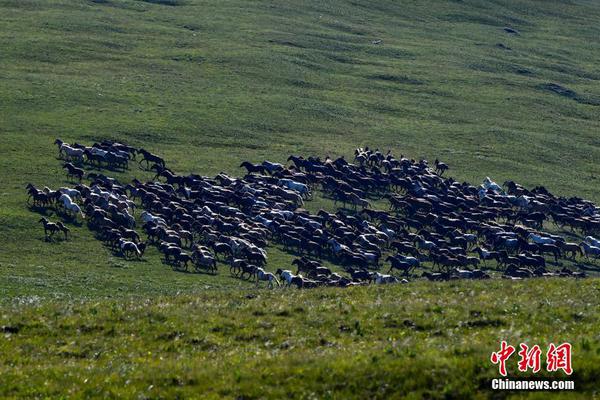
Our position was near Tel el Jemmi, one of the three high hills, each artificially built in the form of a double cross, that once marked the southern boundary of the land conquered by the early Crusaders. It was too far away from the wadi for us to draw our water there; nor in point of fact was there sufficient for our needs had we been conveniently near. There were at least six thousand horses to be watered daily, in addition to which their forage and the men's rations and drinking water had somehow to be brought, and quickly. About two miles from our position and under the shadow of Tel el Jemmi was a nullah, probably an off-shoot of the wadi, perhaps half a mile long by a couple of hundred yards broad.

To the eye it was as if a large slice had been cut out of the earth's crust, leaving a tapering cavity not unlike the shape of a battleship; fortunately, however, the floor was fairly flat and even. The engineers immediately seized upon the nullah and proceeded to transform it into a gigantic reservoir. Along one side of the nullah was dug a series of large shallow tanks shaped like a swimming-bath, the counterpart, in fact, of the one used for the same purpose at Khan Yunus. These were lined with tarpaulins. Next to the tanks was a long row of canvas water-troughs, handy affairs which can be erected in a few minutes; and finally the two were connected by means of hand-pumps, each tank supplying a certain number of troughs. Other parties of engineers were busy making the nullah easy of access and exit, for, except in one place, the sides were too precipitous to allow one even to climb down with safety.