[20] At this time he met another Cardinal, then without his Hat, who knew his people in Manchester. There were many pauses when the talk turned to his home. Francis, untamable in shabbiness, even to the point of rags, explained afterwards: "I did not like to dwell on the subject, lest he should discover that I was in poor circumstances. You see he corresponds with my father." But his father did, of course, already know of his need. A letter, dated April 1892, from Bishop Carroll, runs:--
"MY DEAR MR. MEYNELL,--Francis Thompson's father has agreed to give me a small sum weekly (3_s._ 6_d._) for his son. I have consented to forward it, and will do so monthly, adding a little myself. I now enclose a cheque for 24_s._ It is not much, but it will help.--Ever yours sincerely,
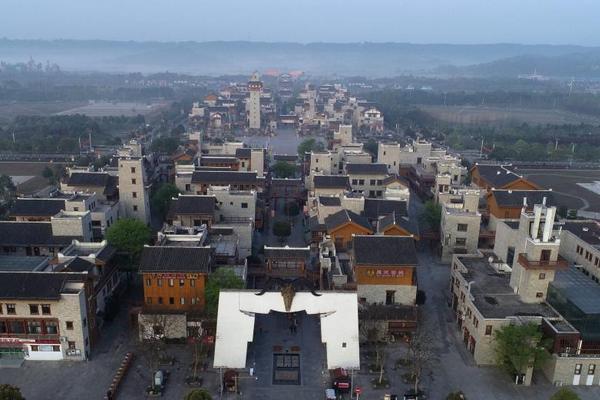
[21] The old Archbishop's House in Carlisle Place.

[22] At this time he wrote to W. M. of an article in _Merry England_:--

"The Franciscan article is decidedly good. But I am getting a little sick of this talk of 'individualism,' which only darkens counsel. The writer seems to mean by it not at all what it means to me--and, I think, to the Cardinal. What _he_ calls regulated individualism many people would call Socialism. In fact, some Socialists claim the Franciscans as a Catholic and religious experiment in the direction of Socialism. It seems to me that you can juggle with words like 'individualism' to suit your own whims."
THE discovery that a man cannot, with any permanence, live by himself was made after his experience in London and at Storrington. He had returned to my father's neighbourhood resolved, not only to be a poet, but to meet the social labours of journalism. This, the elbowing with other workers at a close-packed table in the private room where, every Thursday, my father produced with superhuman effort a fresh number of his _Weekly Register_, meant, much more than a visit to a Cardinal, a return to the humanities. He fell, with much talk, right into the thick of it. He was put to small tasks as much that he might be put out of train for talk as for the use he was. But no device was good enough to do that; set him to write and there would be endless conversation on nibs and paper, of what was advisable to write, what to ignore, of his readers' alleged susceptibilities, and his care for the paper's circulation. In the end after a hard day there might, or might not, be a "par" to show, or some doggerel not to show. To this last order belongs a later attempt to describe the frenzied atmosphere of work:--