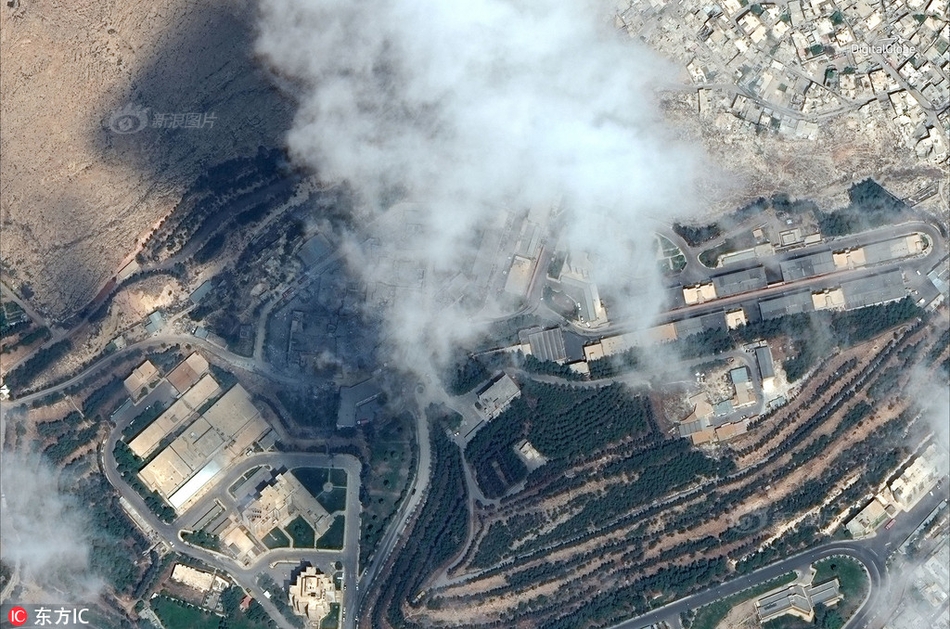
An airstrike in the Yemeni capital Sana'a on 11 May 2015. Photo by Ibrahem Qasim (CC BY-SA 2.0) The conflict in Yemen, which erupted more than two years ago between Houthi rebels and forces backing the government of President Abdrabbuh Mansour Hadi, has plunged the country into an unprecedented humanitarian crisis. Thousands of civilians have been killed and injured, millions are at risk of famine and in need of humanitarian aid, and a cholera outbreak is killing one person every hour. The conflict worsened when a Saudi led coalition, fueled by US, UK and French arms sales, launched an airstrike campaign in support of the internationally-recognized government of Hadi in March 2015. Yet, this conflict has come to be known as the “forgotten war“, and what exacerbates the lack of media coverage are the risks journalists and media in Yemen face. At a time when the voices of Yemeni journalists and media are most needed, they are instead being silenced by the different warring parties. “In light of the war, journalists have been targeted deliberately and systematically because of their work”, Sweden based Yemeni blogger and journalist Afrah Nasser told Global Voices in an e-mail interview. Only recently, two journalists were killed while covering fighting between the Saudi coalition backed forces loyal to president Hadi and forces loyal to Houthi rebels and former president Ali Abdullah Saleh on the outskirts of Taiz, a city in southwestern Yemen. Takieddin al-Hudhaifi, was a freelance cameraman, while Wael al-Absi worked for the official Yemen TV channel. On 26 May, while on the frontline covering the fighting in eastern Taiz, the journalists came under attack and took cover in a nearby building. According to a journalist who spoke to CPJ, Houthi fighters fired a shell at the building, killing al-Hudhaifi and al-Absi, and injuring two other journalists. CPJ could not confirm whether the journalists were deliberately targeted by Houthi fighters. However, Houthi rebels have a record of human rights abuse and press freedom violations. “The armed group of Ansar Allah (Houthis) and the forces of the former Yemeni President Ali Abdullah Saleh top the list of violations of press and media freedom in the country,” Taha Yaseen, media and communication officer at the Yemen based Mwatana Organization for Human Rights, told Global Voices. Mwatna documented violations that include arbitrary arrests, enforced disappearances, raids against media offices, the closure and confiscations of newspapers, unfair trials, and the blocking of websites. Days after Saudi Arabia began its airstrike campaign against Houthi rebels in March 2015, state-owned Yemen Net, the largest internet service provider in the country, blocked several news and search websites. YemenNet and other government buildings and institutions including the ministry of communication and information have been under the control of Houthi militias since January 2015, making it easy for them to censor and block websites that challenge their narrative. Blocked websites include online media sites that have been critical of the Houthis and their rights abuses such as Yemen Press and Mareb Press. Later, the Houthis also blocked websites of the Saudi-onwed Al-Arabiya, and the Qatari-owned Al-Jazeera. A report by the University of Toronto's CitizenLab on information controls in Yemen during the 2015 armed conflict, concluded that Internet filtering products sold by the Canadian company Netsweeper were being used to filter critical political content, independent media websites, and all URLs belonging to the Israeli (.il) top-level domain. According to Mwatna Organization, at least 36 news websites were blocked by YemenNet. For two years, the Houthis have been arbitrarily detaining nine journalists without charge or trial. Nine NGOs demand the release of journalists held by Huthi forces for two years https://t.co/k73oXWrOWe pic.twitter.com/m5pxgLJfNb — Amnesty Gulf (@amnestygulf) June 9, 2017 On 9 June, nine organizations including Amnesty International, Article19 and the Gulf Center for Human Rights (GC4HR), released a joint statement calling for the journalists’ release. According to the statement: Abdelkhaleq Amran, Hisham Tarmoom, Tawfiq al-Mansouri, Hareth Hamid, Hasan Annab, Akram al-Walidi, Haytham al-Shihab, Hisham al-Yousefi and Essam Balgheeth have been detained since 9 June 2015 when they were arrested by armed men in a room from where they were working in Qasr Al-Ahlam Hotel, Sana’a. Those who arrested the men were dressed in a mixture of civilian, military and General Security clothing, and some had slogans on their weapons that are associated with the Huthi armed group and its political wing, Ansarullah.
Crime Digest
Caught Between Saudi Coalition and Houthi Rebels, Yemeni Journalists Face Challenges on All Sides
Tags